Seat Height
Thighs parallel to the floor, feet fully supported. Hips slightly above knee level may help maintain a natural spinal curve for some people.
Foundational principles for seated alignment at your desk workspace. Educational information only — not medical advice.
Your chair is the foundation of seated posture. Adjust the seat height so your feet rest flat on the floor with knees bent at approximately 90 degrees. If your feet do not reach the floor, use a footrest to maintain stable support.
The seat pan should allow two to three fingers of space between the front edge and the back of your knees. This spacing may help reduce pressure on the backs of your thighs during long sitting periods.
Thighs parallel to the floor, feet fully supported. Hips slightly above knee level may help maintain a natural spinal curve for some people.
Both feet flat and shoulder-width apart. Avoid crossing legs for extended periods as it shifts pelvic alignment.
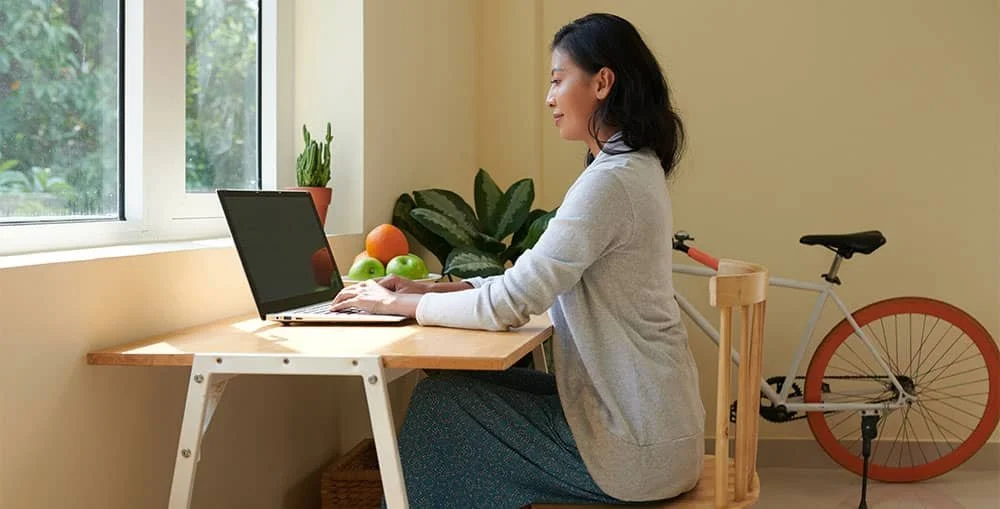
Maintain contact between your lower back and the chair's lumbar support. This may help preserve the natural inward curve of your lumbar spine and reduce the tendency to slump forward as fatigue sets in.
Your shoulders should rest in a relaxed, neutral position — not pulled back aggressively, but not rounded forward either. Imagine a gentle upward lift through the crown of your head while keeping your chin level.
Your forearms should rest comfortably on the desk or armrests with elbows bent at roughly 90 degrees. Wrists remain in a neutral, straight position — not bent upward or downward while typing.
Keep frequently used items within easy reach to minimize repetitive reaching and twisting. Your keyboard and mouse should sit at the same level, close enough that your upper arms stay close to your body.
Perfect posture is not a static target — it is a range of comfortable positions you move through during the day. Set gentle reminders to pause, stand, and reset your alignment every 30 to 45 minutes.
Over time, these spatial habits may become more familiar. Many people find it easier to notice when they have drifted out of alignment and adjust their position accordingly.